

Many first-time entrepreneurs think the first step to launching a skincare brand is finding a manufacturer. While choosing the right manufacturing partner is important, it should not be your starting point.
A successful skincare brand begins with understanding who you are creating products for and what problem you are trying to solve. These answers become the foundation of your business and influence every major decision you will make, from product formulation and branding to packaging, pricing, and marketing.
Today, starting a skincare brand in the Philippines is more accessible than ever. You no longer need your own laboratory or manufacturing facility to bring your ideas to life. By partnering with an experienced skincare manufacturer in the Philippines, you can focus on building your brand while specialists handle product development, manufacturing, and production.
Having access to manufacturing is one thing. Building a brand people trust is another.
Building a beauty brand still requires careful planning, market research, and a clear understanding of your customers. The strongest brands are not simply built around great products. They are built around solving real customer problems and delivering a consistent experience that people trust.
Whether you are planning to launch a single hero product or an entire skincare collection, this guide will walk you through the key steps to building your brand with confidence.
Why Start a Skincare Brand in the Philippines?
The Philippine beauty industry continues to grow as more consumers make skincare part of their daily routine. People are becoming more intentional about the products they use, paying closer attention to ingredients, product claims, and brands they can trust.
At the same time, it is easier than ever to introduce a new brand to the market.
Social media, ecommerce platforms, and online communities have changed the way people discover skincare. A small business can now reach customers nationwide through its website, Shopee, Lazada, TikTok Shop, Facebook, Instagram, or trusted retail partners without opening a physical store.
For entrepreneurs, this creates more opportunities than ever to build and grow a skincare brand.
Launching another cleanser or serum is not enough. Consumers are looking for products that solve real concerns, whether that is acne, sensitive skin, pigmentation, dryness, or healthy aging. They are also looking for brands that communicate clearly and deliver a consistent experience.
The opportunity
Strong brands do not try to appeal to everyone.
They understand who they are serving, develop products that meet those needs, and build trust over time. That is exactly where your journey should begin.
Step 1: Define Your Brand and Target Market
Before choosing ingredients or deciding what your packaging should look like, take a step back and ask yourself one important question:
Who is this brand for?
It sounds simple, but it is one of the most overlooked parts of building a skincare business.
Many first-time entrepreneurs get excited about product ideas and jump straight into manufacturing. They request quotations, compare suppliers, and discuss packaging before they have a clear picture of their customer.
The result? Products that look good but struggle to connect with the people they are meant to serve.
Your target market influences almost every decision you will make. Once you know who you are creating products for, it becomes much easier to choose formulations, pricing, branding, packaging, and even your marketing strategy.
Instead of trying to sell to everyone, focus on serving one audience well.
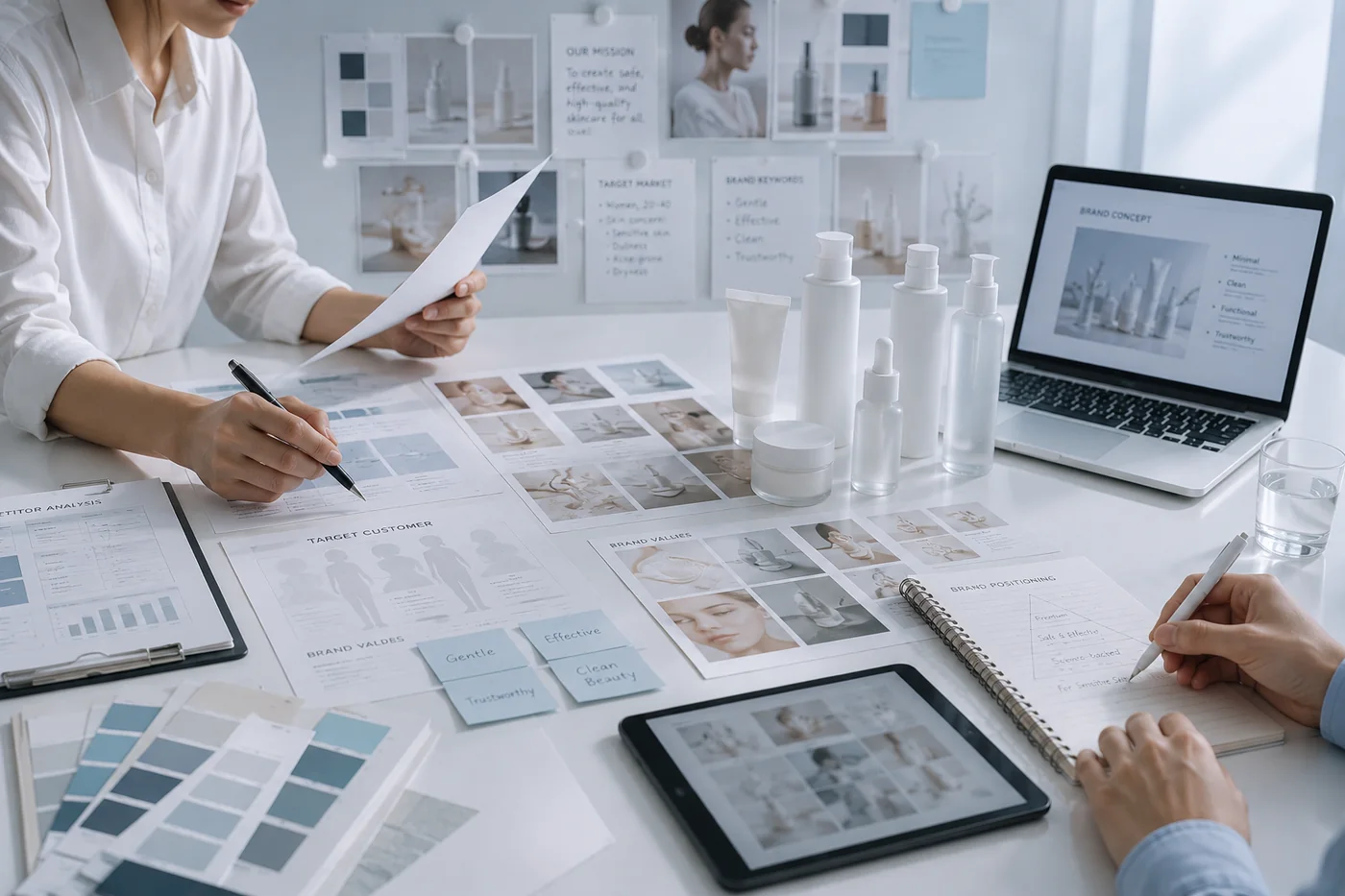
Know Your Ideal Customer
Define your customer before choosing products or packaging. A clear audience makes every business decision easier.
- Teenagers with acne
- Busy professionals
- People with sensitive skin
- Men looking for simple skincare
- Customers interested in healthy-aging products
Identify Your Unique Selling Proposition (USP)
Your USP gives customers a reason to choose your beauty brand. It may be custom formulation, minimalist routines, naturally derived ingredients, or products designed for the Philippine climate.
Validate Your Idea
Read reviews, study competitors, and join skincare communities before investing in product development. Taking time to validate your skincare product idea early can help you avoid costly mistakes and build products with real market demand.
Quick check
Are you ready for product development?
Before moving forward, make sure you can confidently answer these questions:
- I know who my target customer is.
- I understand the skincare concern I am solving.
- I know what makes my brand different.
- I can clearly explain my brand in one sentence.
- I have researched customers before investing in product development.
If you answered yes to each one, you are ready for the next step: choosing the products that will represent your brand.
Step 2: Research the Products You Want to Sell
Now that you know who you are building your brand for, it is time to decide what you will actually sell.
This is where many entrepreneurs get carried away.
It is exciting to imagine launching a complete skincare line with cleansers, toners, serums, moisturizers, sunscreens, masks, and more. But launching too many products at once can quickly increase your costs and make inventory management more complicated.
Instead, start small.
Many successful skincare brands began with just one or two products that solved a specific problem well. Once customers trusted the brand, expanding the product line became much easier.
Think of your first product as your introduction to the market. It should clearly reflect what your brand stands for and give customers a reason to come back.
Study the Market
Start with one or two hero products. Compare ingredients, claims, packaging, pricing, and customer reviews.
Build a Product Line
Choose products that naturally work together, such as a cleanser, toner, serum, and moisturizer. Planning your first skincare product line around a simple routine can also encourage repeat purchases as your brand grows.
Plan Your Budget
Budget for minimum order quantity (MOQ), FDA requirements, packaging, branding, manufacturing, marketing, and contingency costs.
Step 3: Choose the Right Skincare Manufacturer
Choose a cosmetic manufacturer in the Philippines that provides formulation support, quality control, packaging services, regulatory guidance, and room to grow. Knowing what to look for in a skincare manufacturer can help you build a stronger long-term partnership.
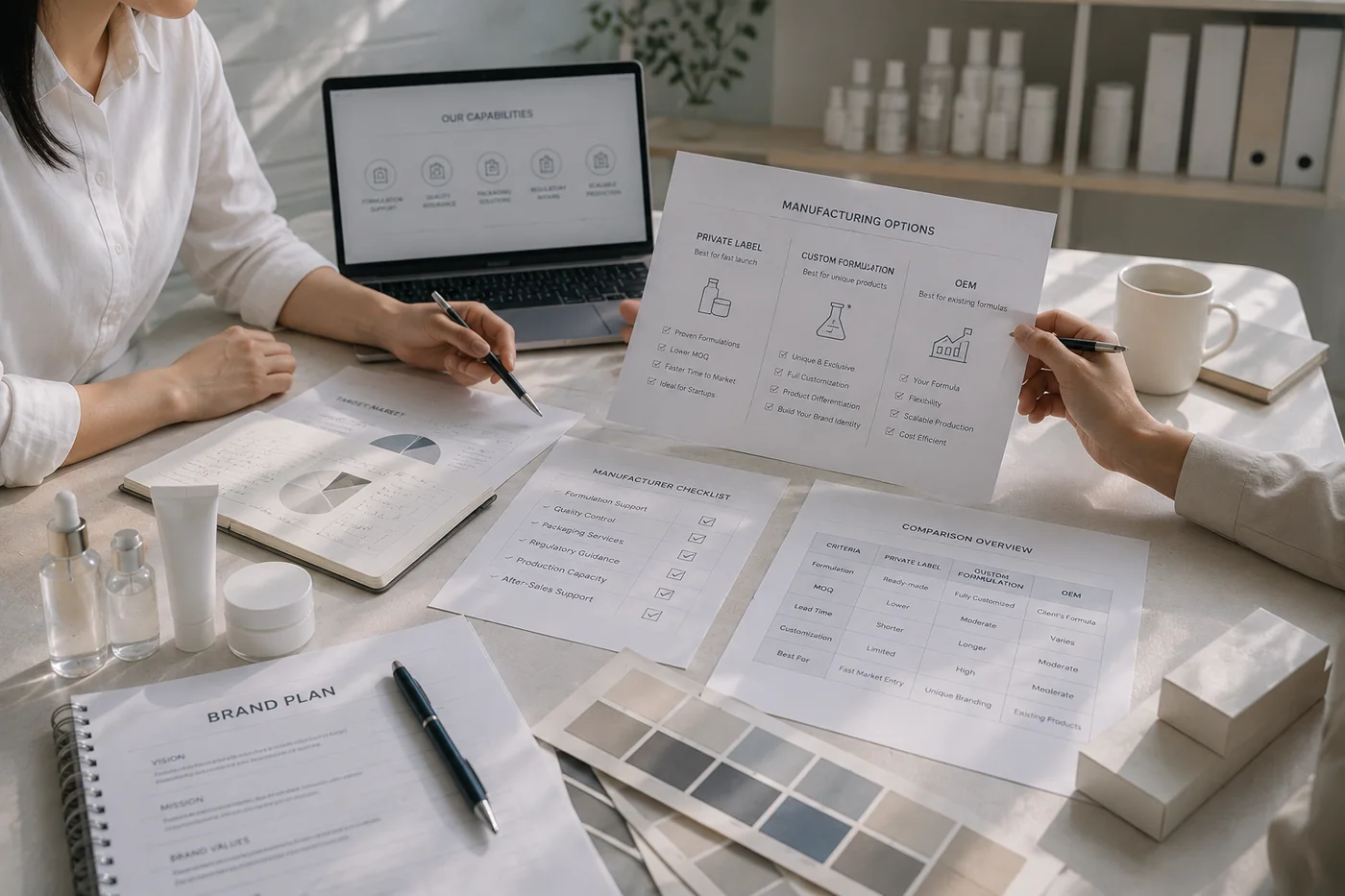
Understand Your Options
Depending on your goals, you may choose private label skincare in the Philippines, custom formulation, or OEM manufacturing. Understanding the differences between private label and custom formulation will help you choose the option that best fits your budget, timeline, and business goals.
| Option | Best for | Description |
|---|---|---|
| Private Label Skincare | Faster launch | Use proven formulations as the starting point. |
| Custom Formulation | Unique products | Develop a formulation tailored to the brand direction. |
| OEM Cosmetics | Existing formulas or specifications | Manufacture to reviewed client specifications. |
OEM cosmetics in the Philippines may be suitable for businesses that already have an established formulation, product specification, or concept ready for manufacturing.
What to Look For
Choose a cosmetic manufacturer in the Philippines that provides formulation support, quality control, packaging services, regulatory guidance, and room to grow.
At Kakushin Skin Corporation, we believe manufacturing is about building partnerships, not simply producing products.
Quick check
Before choosing your manufacturer
- I understand the difference between private label, custom formulation, and OEM manufacturing.
- I have discussed MOQ, timelines, and production requirements.
- I am choosing a partner based on expertise and support, not just price.
- My manufacturer can help with formulation, packaging, and regulatory guidance.
- I feel confident that my manufacturing partner can grow with my business.
Step 4: Develop and Test Your Products
With your product concept in place, it is time to begin skincare product development in the Philippines and turn your idea into a product that is ready for the market.
Review product samples carefully and refine formulations before production. Understanding the skincare product development process will help you give better feedback during sampling and prepare for a smoother production stage. Evaluate the texture, scent, consistency, appearance, and overall user experience to ensure the product aligns with your brand standards. Do not hesitate to provide feedback during this stage, as small refinements can make a significant difference in the final product.

If your brand requires a unique product, custom cosmetic formulation in the Philippines may involve several rounds of sampling and refinement. This allows you and your manufacturing partner to adjust the formula before moving into full production.
It is also important to discuss timelines with your manufacturing partner early on. Product revisions, packaging availability, and FDA requirements can all affect your launch schedule, so planning ahead helps avoid unnecessary delays.
Step 5: Build Your Brand Identity and Packaging
Your product may attract customers, but your brand is what they will remember. A strong skincare brand identity helps customers recognize your products and remember your business long after their first purchase.
Brand identity includes your logo, messaging, colors, packaging, and the overall experience you create for your customers. Every touchpoint should consistently reflect your brand’s personality and values.
Packaging should do more than protect your product. It should communicate quality, appeal to your target audience, and clearly present the information customers need. A strong brand identity helps build recognition and trust, making it easier for customers to choose your products again in the future.
Step 6: Understand FDA Requirements
Before introducing your skincare products to the market, it is important to understand the applicable FDA requirements in the Philippines.
Proper documentation and compliant product labeling help ensure your products meet regulatory standards and give customers greater confidence in your brand. Starting this process early can help prevent delays when you are ready to launch.
Working with an experienced manufacturing partner can make compliance much more manageable by providing guidance on documentation, labeling requirements, and the overall regulatory process.
Regulatory note
Confirm the requirements for your specific product and business.
Regulatory pathways and responsibilities depend on the product, establishment, intended market, and submitted materials. Use current official Philippine FDA guidance and qualified regulatory support rather than treating general educational content as a substitute for case-specific advice.
Step 7: Prepare for Launch
A successful launch involves more than simply making your products available for sale.
Before launch day, prepare your product photos, educational content, pricing, website or ecommerce listings, and marketing materials. Customers often research a brand before making a purchase, so clear and informative content can help build credibility from the start.
Whether you plan to sell through your own website, online marketplaces, clinics, salons, or retail partners, having a well-planned launch strategy will help you introduce your brand with confidence and reach the right audience.

Common Mistakes to Avoid
Every skincare entrepreneur learns along the way, but some mistakes are easier to avoid than others.
Launching too many products
A large product range may seem impressive, but it also increases costs, inventory, and complexity. Starting with one or two well-developed products is often the smarter approach.
Choosing a manufacturer based only on price
Lower production costs can be appealing, but your manufacturing partner also affects product quality, timelines, communication, and long-term growth. Consider the overall value they bring to your business.
Skipping market research
Creating products without understanding your audience often leads to weak sales and missed opportunities. Spend time learning about your customers before investing in production.
Overlooking branding and packaging
Customers form opinions quickly. Strong branding and thoughtful packaging help build trust before someone even tries your product.
Underestimating marketing costs
Even the best product needs visibility. Plan for marketing as part of your startup budget instead of treating it as an afterthought.
Avoiding these mistakes will not guarantee success, but it will give your brand a much stronger foundation from the beginning.
Frequently Asked Questions
How much does it cost to start a skincare brand?
The cost depends on several factors, including product development, packaging, manufacturing, minimum order quantity (MOQ), branding, marketing, and regulatory requirements. Starting with a smaller product range can help make your initial investment more manageable.
Should I choose private label skincare or custom formulation?
It depends on your goals. Private label skincare is generally the faster option because it uses existing formulations that are ready for branding. Custom formulation takes longer but allows you to develop products that are exclusive to your brand.
Can I start with just one product?
Yes. Many successful skincare brands begin with a single hero product before expanding into a full product line. Starting small allows you to gather customer feedback, manage your budget more effectively, and build your reputation before introducing additional products.
Do I need to understand FDA requirements before launching?
Yes. Understanding the applicable FDA requirements helps ensure your products are properly prepared for the market. Working with an experienced manufacturing partner can make this process much easier by providing guidance on documentation and product labeling.
Conclusion
Starting a skincare brand in the Philippines is an exciting opportunity, but building a successful one takes more than choosing a product and finding a manufacturer.
Building a successful skincare brand starts with understanding your customers. From there, every decision becomes more intentional, from selecting the right products and building your brand to choosing a manufacturing partner and preparing for launch.
You do not have to do everything at once.
Many successful brands begin with one great product, a clear vision, and a commitment to continuous improvement.
With the right strategy and an experienced beauty product manufacturer in the Philippines, you can build a brand that launches with confidence and has room to grow over time.
Your next step
Turn a clear idea into a practical product brief.
If you are ready to bring your skincare ideas to life, partnering with an experienced manufacturer can help turn your vision into products your customers will trust and love. As your business grows, continue learning about product development, branding, regulatory requirements, and manufacturing to build a stronger skincare brand for the long term.
Editorial standards
Clear information, responsible context.
Kakushin Journal content is educational and reflects general product-development and cosmetic-industry knowledge. It does not diagnose, treat, cure, or prevent medical conditions.
- Editorial reviewer
- Kakushin Product Development Team
- Last reviewed
- August 6, 2026
